
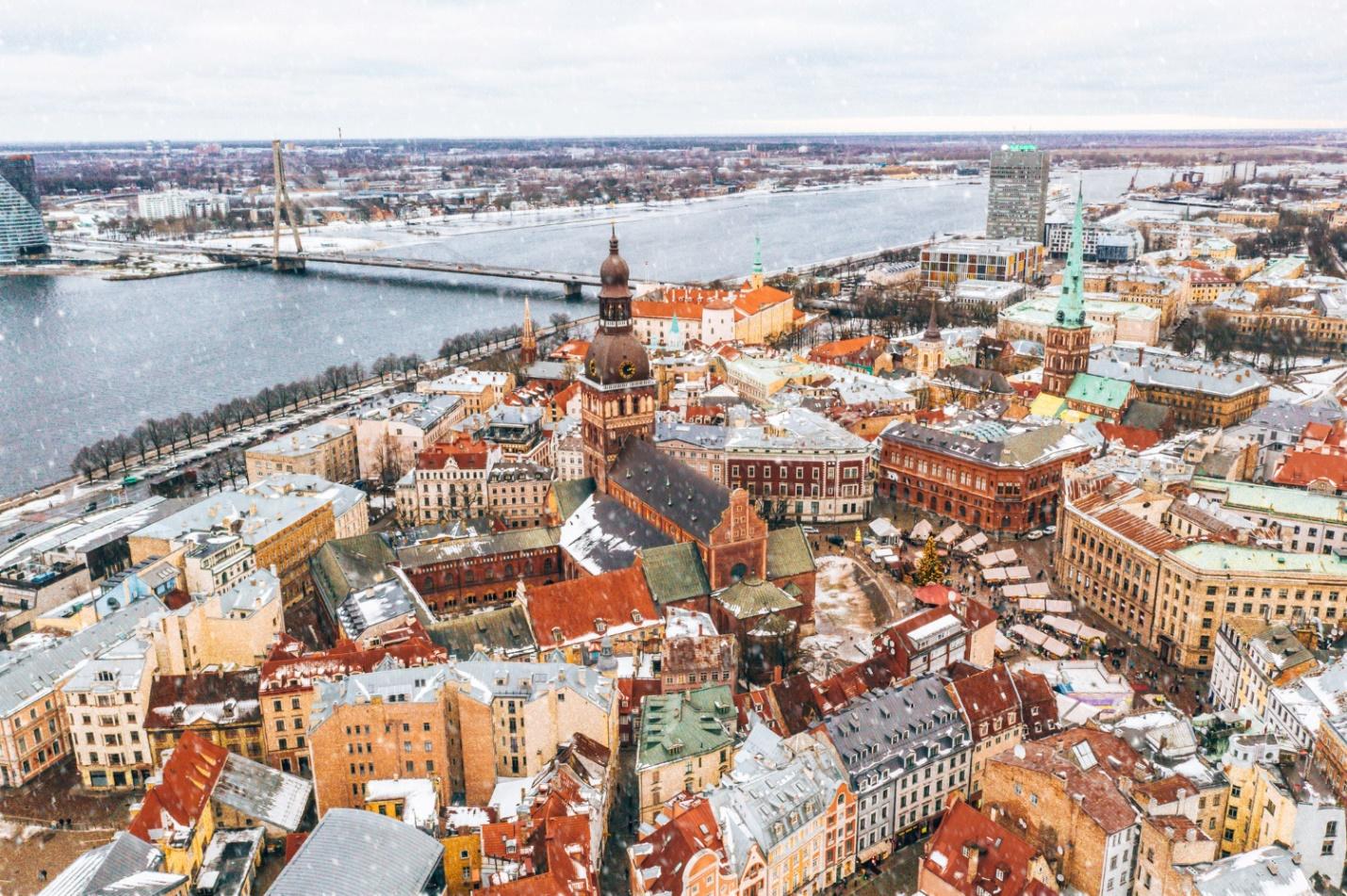
In recent years, the Baltic countries have strengthened their position as popular short-break destinations in Europe. Compact historic city centers, reasonable prices, convenient bus service, and short distances between capital cities make it possible to experience three countries in a single trip. This article explores what shapes the Baltic tourism offer and how travelers plan their itineraries, accommodations, and entertainment.
Riga, Tallinn, and Vilnius are approximately 300 kilometers apart, and the intercity bus journey takes approximately four to five hours. This makes the so-called Baltic Triangle easily included in even a week-long trip.
In Riga, travelers are most often drawn to the Art Nouveau neighborhoods of Alberta and Elizabetes Streets, the squares of the Old Town, and the pavilions of the Central Market. Tallinn’s Old Town, with its preserved medieval ramparts, is a UNESCO World Heritage Site. Vilnius’s architecture is dominated by Baroque, while the Užupis district is known for its artists’ studios and informal atmosphere.
During summer, a significant number of local tourists and travelers from neighboring countries choose the coast: Jurmala in Latvia, Pärnu in Estonia, Palanga, and Nida in Lithuania. The Curonian Spit, also a UNESCO World Heritage Site, is one of the most recognizable nature tourism destinations in the region.
Wellness and spa tourism are also on demand. Druskininkai in Lithuania, Jurmala in Latvia, and Haapsalu in Estonia historically developed as resort towns, and many local hotels offer wellness packages not only in summer but also in other seasons. National parks — Gauja, Ķemeri, Lahemaa, and Aukštaitija — feature a variety of hiking and cycling trails.
The capitals’ nightlife includes restaurants, craft beer bars, concert halls, and seasonal events. Some hotels in central districts operate in collaboration with licensed gambling establishments. This industry is regulated by law in the region and imposes specific requirements on operators.
All three countries use EUR and are part of the Schengen Area, so crossing borders requires no additional formalities. English is widely spoken in the service sector in the capitals.
High season runs from June to August. Accommodation prices are highest during this time, and it is recommended to book hotels several weeks in advance. May and September offer similar weather conditions but lower prices. In December, Christmas markets in the capitals create a festive wave of short tourist trips.
Public transportation in the cities is inexpensive and covers most areas, while for exploring the countryside and coastline, a rental car is more convenient. Intercity routes are served by several carriers, and tickets purchased online are usually cheaper than those purchased on site.


